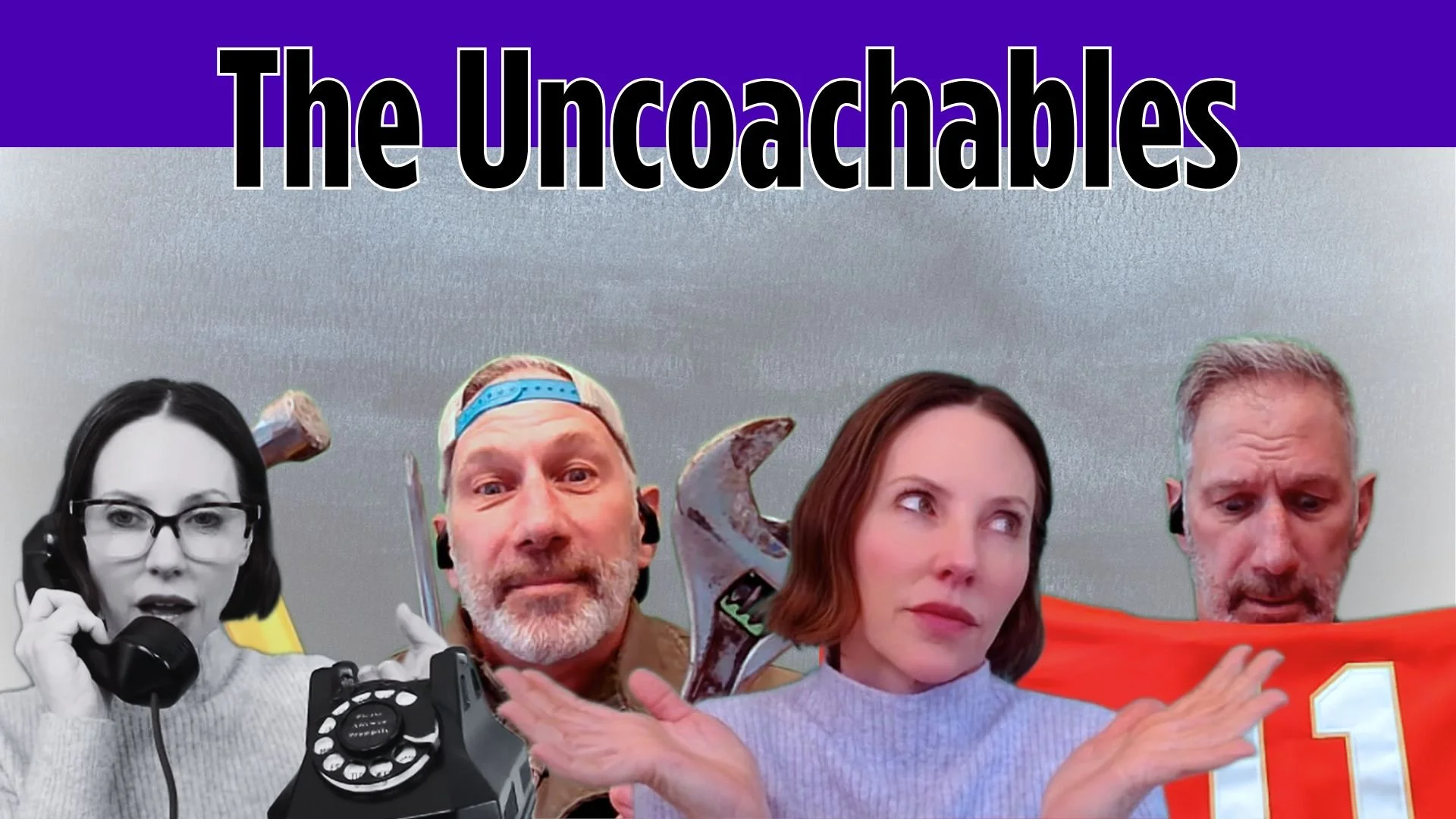
The Uncoachables — 5 Red Flags
That Reveal When Coaching Won’t Work (Yet)
The Moment Every Coach Knows
Have you ever experienced this?
The client settles into the chair. Same tone, same story, fourth session in a row. And you wonder, “Am I Bill Murray in Groundhog Day?”
But you stay present.
You listen. You ask questions meant to open a new doorway. But each answer circles back to the same loop: reasons, memories, justifications (ahem….excuses). You can almost feel the air tighten in the room as the circling turns into a spiral.
It’s not that they don’t want help. They do. They want to be seen, understood, and even acknowledged. But somewhere between being seen and being coachable, the bridge hasn’t formed. Every time you approach the edge, they sense the gap, and turn back to the safety of familiar territory.
Every experienced coach eventually faces that quiet realization (usually after they question their own abilities first):
“Oh… this might not be a coaching issue at all.”
That’s when discernment becomes more important than technique. Because readiness, not effort, determines whether coaching works.
The Origin of The Uncoachables
When we launched The Uncoachables series, we wanted to answer one deceptively simple question: How do you know when someone isn’t ready for coaching?
We called them the five red flags, familiar client patterns that almost every coach has encountered but rarely talks about openly. At first, it was lighthearted. But the deeper we went, the more we saw how these archetypes weren’t just client types, they were mirrors for us, too.
Each “uncoachable” type reflects both a challenge and an invitation, a chance to clarify your boundaries, deepen your presence, and protect your energy.
You can spot them within minutes. Confident, articulate, even charming. They’ve read every leadership book, completed the assessments, and already diagnosed themselves. They’re not against coaching, they just want it to confirm what they already believe.
On one level, they’re right, they don’t need fixing.
On the other hand, the more they cling to what they know, the more they limit who they can become.
What This Reveals:
The Know-It-All tests a coach’s ego. The moment we try to prove our value, we lose it. Coaching depends on curiosity, and certainty, even well-meaning certainty, is the enemy of discovery.
“Let me give you some background.”
That’s how every session begins. Then comes the detailed archive, the who, what, and why of everything that ever happened. The Historian lives in story. The past becomes both comfort and cage.
And if we’re honest, most of us have been there too.
I’ve (Dan) actually caught myself doing this a couple of times when I’ve been in the client’s seat. For some reason, I felt it was necessary to explain, in detail, what were ultimately pointless data references. When I finally noticed it, I remember saying, “Oh! I just did what my clients sometimes do… wow, interesting.” It was eye-opening.
What This Reveals:
Reflection without direction becomes regression. The Historian reminds us that coaching lives in the present, in what’s possible next, not what’s already been told.
They didn’t choose coaching; coaching chose them. A manager, HR leader, or partner decided it was time. They sit politely, say the right things, and look engaged. But the spark, that vital self-ownership, isn’t there.
The truth is, ownership hasn’t left the room; it never entered. Without it, the conversation can’t go anywhere. When the client isn’t invested in the change, coaching becomes performance, not partnership.
What This Reveals:
The Draft Pick teaches humility. No amount of skill can replace genuine willingness. Until desire belongs to the client, the coach becomes a performer instead of a partner.
“What should I do?”
The Outsourcer loves insight but avoids ownership. They want answers, frameworks, next steps, anything that feels like momentum but keeps them dependent on someone else.
We have noticed that the two phrases coaches tend to jump at the most are “What should I do?” and “I don’t know.” They sound like invitations for us to step in and save the day, but they’re not. It takes real restraint to resist that temptation.
Outsourcers often look for direction so they have someone to blame when things go wrong. “You told me to.” Don’t be the person they’re pointing at.
What This Reveals:
They tempt us to over-function. The Outsourcer challenges our discipline to stay in the role of guide, not fixer. True coaching is not a transaction of advice; it’s the art of holding space for someone’s own intelligence to emerge.
The Unloader uses coaching as release, not reflection. They vent, process, and pour out everything until the clock runs out. They leave lighter, but unchanged.
Venting can release pressure for a moment, but if it ends there, nothing shifts. Without exploring what’s underneath the release, the space that opens up just fills again with the same old noise.
What This Reveals:
Compassion alone isn’t transformation. The Unloader invites us to interrupt gently and steer toward awareness, not catharsis.
Coachability Snapshot: 1-Minute Reflection
Pause here before scrolling further.
Think about your last month of sessions.
Which of these red flags have you met recently?
☐ The Know-It-All
☐ The Historian
☐ The Draft Pick
☐ The Outsourcer
☐ The Unloader
When they show up, how do you respond, curiosity, fatigue, humor, or strategy?
What’s one micro-shift you could make in your next session to protect your energy?
Share your reflections in the comments or jot them privately. The noticing is the work.
Why These Red Flags Matter
Recognizing these patterns early protects more than your calendar, it protects your presence. Saying “no” to an unready client isn’t judgment; it’s stewardship.
Each red flag is a signal that something in the foundation, trust, ownership, timing, isn’t ready yet. And that’s okay. Coaching doesn’t fix readiness. It meets it.
Closing Reflection
Looking back, The Uncoachables was never meant to diagnose anyone. It was a mirror for our profession, a reminder that discernment is a form of care.
Every coach will eventually meet The Know-It-All or The Historian. And at some point, each of us will find traces of them within ourselves. That’s the real work, not judgment, but awareness.
Because being coachable isn’t a label; it’s a moment.
And knowing when that moment has arrived is what separates good coaching from wise discernment.
When you can name the red flags, you stop taking them personally. You start seeing patterns, not problems.
And that’s the real art of coaching, noticing when the work can begin, and when it’s not time yet.
FAQs About Coachability and Red Flags in Coaching Clients
-
It doesn’t mean they’re difficult, it means the timing, mindset, or conditions for growth aren’t yet in place.
-
Absolutely. Readiness changes. Sometimes the best service you can offer is to pause or refer out until the client is ready.
-
Defensiveness, lack of follow-through, blaming others, or constant venting without insight are reliable early indicators.
-
Name the pattern with curiosity: “I notice we’ve been revisiting the same story, what do you think keeps us here?”
-
Clear boundaries, supervision, and self-reflection. You can’t hold readiness for someone else.
-
Not at all. They’re patterns, and patterns shift once awareness enters the room.
Further Reading
For additional insight into coachability and client readiness, explore the International Coaching Federation’s article on coachable clients → ICF Resource on Coachability
Ready to see these five red flags in action?
Watch “The Uncoachables” Series Here
Get “The Well Coach” — your free guide to staying, energized, and effective in every client conversation. Download our free interactive guide here.
MCXI Institute | Daniel Olexa and Monselete Bowden